EMAIL: info@jmsolarbess.com MOBILE / WHATSAPP: +86-15638573159

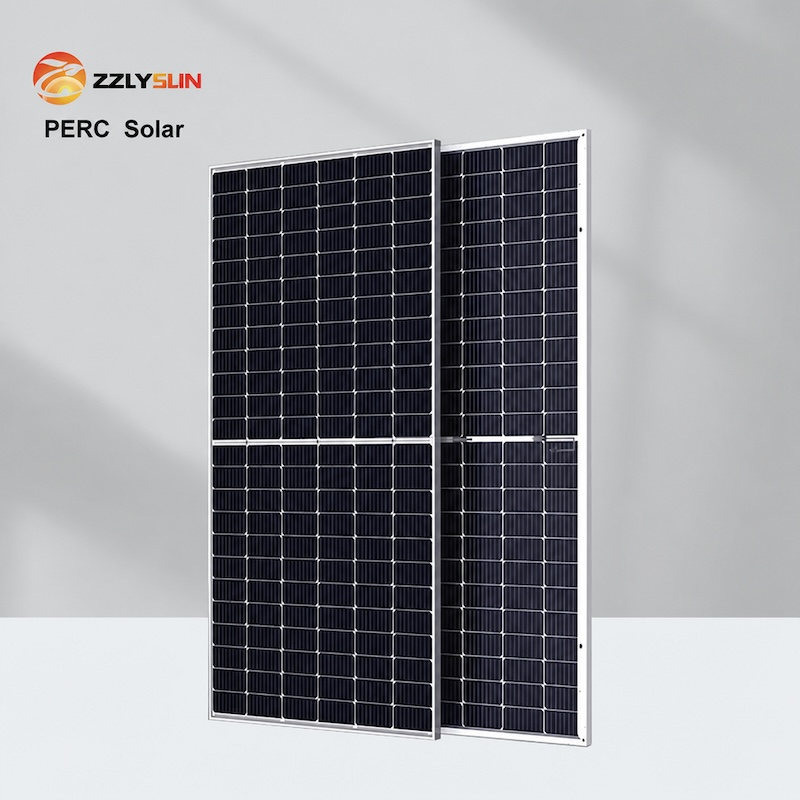
PREC Solar Panels Supplier
ZZLYSUN are a supplier specializing in PERC solar panels, offering high-efficiency monocrystalline modules that balance performance and cost-effectiveness. Our products range from compact off-grid modules to 550W-720W power half-cut modules, all produced under strict quality control and certified by IEC/TÜV/UL and backed by transparent test data. With 10 years of experience in the photovoltaic industry, we help residential, commercial, and off-grid customers reduce energy costs with reliable and economical photovoltaic solutions. Whether it’s standard stock, OEM/ODM customization, or bulk wholesale, we can provide fast quotations, flexible order quantities, and reliable after-sales support. Choose us as your trusted supplier of PERC solar panels – quality is verifiable, and the price is sincere.
What is the PERC solar panels?
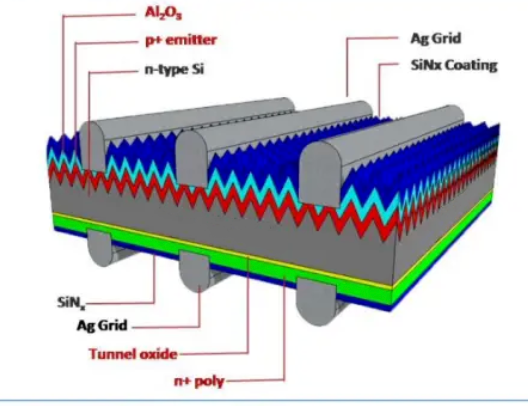
PERC (Passivated Emitter and Rear Cell) is a solar cell technology based on P-type silicon wafers. PERC cells achieve higher efficiency by adding a back passivation layer (usually aluminum oxide or other materials) to the back side of the cell, which reduces the reverse recombination of electrons. The PERC technology mainly optimizes the structure of the cell to convert more light energy into electrical energy.
PREC Solar Panels Advantages
Why choose ZZLYSUN PREC Solar Panels ?
High Market Share
PREC solar panel currently account for 60% of the most market share.
Cost-effectiveness
PERC Solar panel have a cost advantage, as their cost is comparable to that of common solar panels.
Mature Technology
PERC Solar Panels are currently the most dominant technology route in the market, featuring high industrialization efficiency and low production costs.
PERC Solar Panels Application Scenarios
Warehouse Solar System
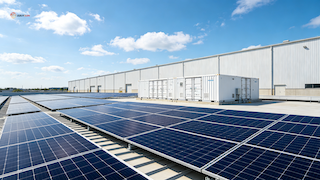
Adding battery storage system ,it can realized peak shaving (charge in the day, discharge during peak demand charges), backup power for critical operations, and better self-consumption in the evening.
Solar panels for distribution center
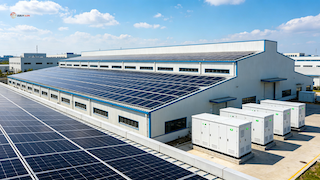
Hybrid systems add peak demand reduction, backup power for production lines, and higher self-consumption. It is good for industrial factory with critical loads or unreliable grids.
Solar panels for remote monitoring station
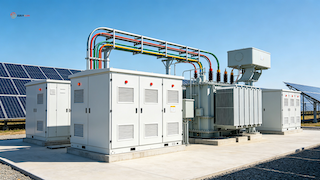
A telecom tower solar system typically combines PV array + LiFePO₄ battery + hybrid controller + DC power system, with the existing diesel generator demoted to automatic backup.
TOPCon vs PERC solar panels
Items | PERC Solar Panels | TopCon Solar Panels | PERC vs Topcon Solutions |
Solar Efficiency(STC) | 20.5%–22% | 22%–24.5% | Topcon is good for the EPC or utility project . |
Temperature coefficient | −0.34 ~ −0.40%/°C | −0.29 ~ −0.32%/°C | TOPCon keeps noticeably more output on a hot weather. So it is good for clients who live in a hot climate (Arizona, Australia, the Middle East, Southeast Asia) |
First year Degradation | approx 1.5%–3% | approx 1% | Over 25–30 years, TOPCon modules generally retain a higher percentage of rated power . |
Annual Degradation | 0.40%–0.55%/year | 0.30%–0.40%/year | Over 25–30 years, TOPCon modules generally retain a higher percentage of rated power . |
Bifacial efficiency | 70% | 80%–85% | Topcon can increase the additional power generation capacity. |
Per watt/price | approx $0.22–0.35/W | approx $0.25–0.40/W | PERC is a little cheaper than TOpcon solar panels in the most market. |
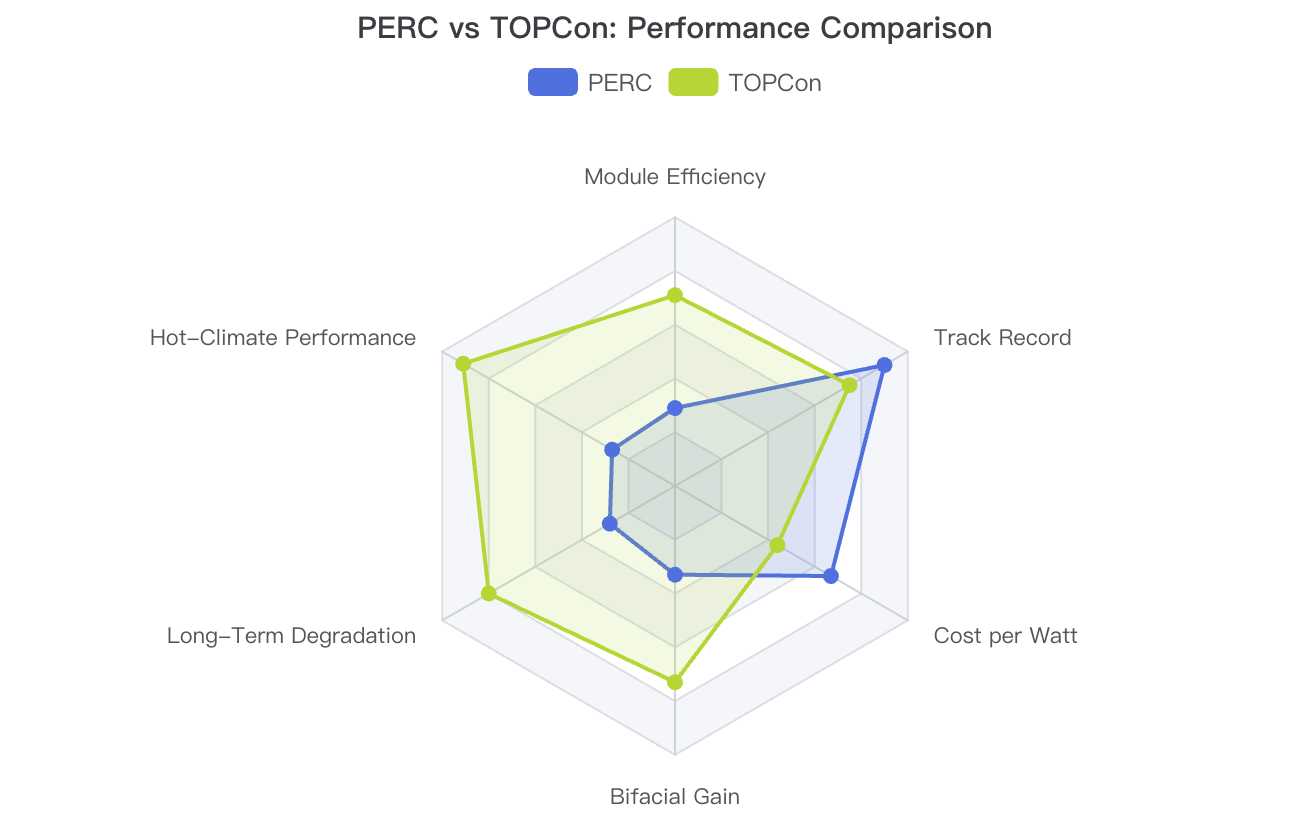
Which solar panel is better PERC or TOPCon?
- Choose PERC if you’re budget-sensitive, have plenty of mounting space, live in a mild climate, or want the most battle-tested technology (common for off-grid, RV, and large ground arrays where cost per watt drives the ROI).
- Choose TOPCon if roof space is limited, you’re in a hot climate, you want maximum yield per square meter, or you’re building a ground-mounted bifacial system and plan to hold it 25+ years.
Frequently Asked Questions
TOPCon has become the new industry standard, but PERC panels are still widely produced, sold, and backed by warranties — and they remain the best cost-per-watt option for many projects.
Yes — they simply lose slightly more output at high temperatures than TOPCon. If summers are extreme, compare the temperature coefficient on both datasheets before buying.
Not recommended on the same string without proper MPPT design, because their voltage/current curves differ. Use separate strings or a compatible inverter configuration.