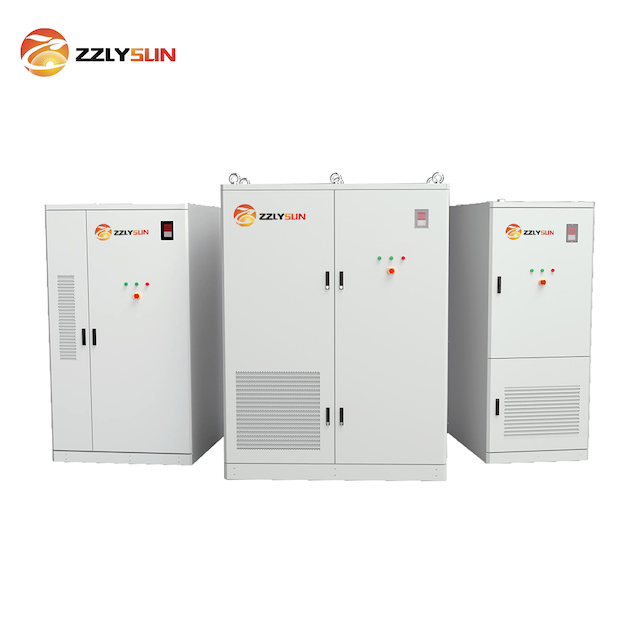
Energy Storage Cabinet

Product Type:  Commercial Lithium Battery Cabinet
Cell Type: 3.2V 314AH/3.2v 280ah
System Capacity: 100kwh,215kwh,241kwh,261kwh,418kwh,522kwh.                                                                                                         Rated Power:100kw,125kw,150kw,200kw,250kw.
Whatsapp
×

9 + 4 = ?

Why use the energy storage cabinet?

The grid-tied solar system is reply on the sunshine conditions,the day time generate surplus electricity,which can not be used in night time,so it can not meet for the all day load requirement.At the same time,The large-scale integration of photovoltaic power sources has significantly increased the pressure on the power grid.So the solar energy storage system is not only generate the electricity to supply for the day time,the surplus electricity can charge the lithium battery,when on the night,the battery can meet the load requirement.Ultimately, the goal is to achieve the triple objectives of maximizing the local consumption of clean energy, reducing the pressure on the power grid, and lowering the electricity costs for users.

The four Advantages of the energy storage cabinet

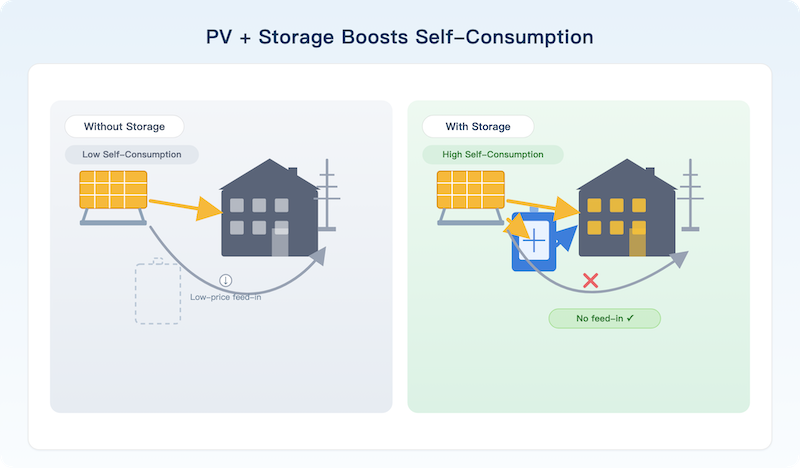
1.Increase the self-consumption rate of PV power and reduce the cost of purchasing electricity from the grid.

Self-consumption rate of distributed photovoltaic systems without energy storage is usually low. A large amount of excess electricity can only be sold at a low price. With the addition of energy storage, the self-consumption rate of photovoltaic power can be significantly increased, maximizing the utilization of zero-cost green electricity from photovoltaic power and reducing the purchase of expensive grid electricity.

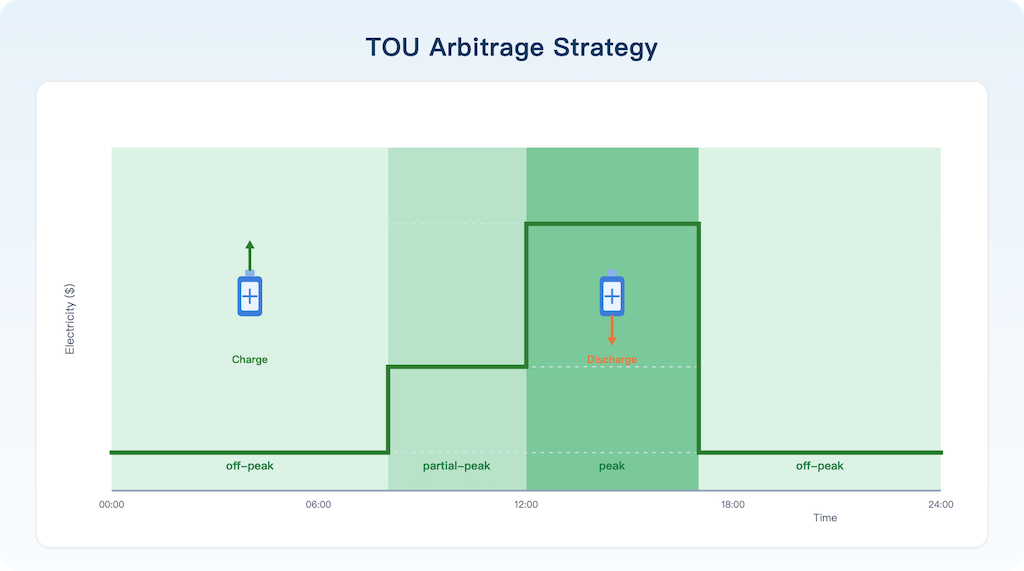
2. Peak-valley electricity arbitrage, obtaining the profit from the time-of-use electricity price difference

In most regions,there is a price difference between peak and off-peak periods for industrial and commercial electricity. In some areas, this price difference can be as high as over 0.25usd per kWh. The system storage green electricity generated by photovoltaic power during the day and discharges it during the evening peak hours. Without relying on the low-price electricity from the grid, it can complete arbitrage and reduce the cost per kilowatt-hour compared to pure grid charging and discharging arbitrage.

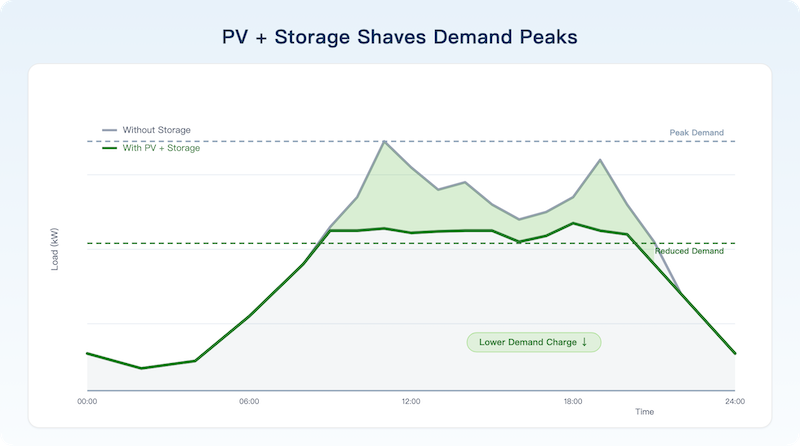
3.Reduce the basic load and lower the basic electricity charges for enterprises

Industrial and commercial users are required to pay basic demand charges, which are calculated based on the maximum peak of electricity consumption. The photovoltaic storage system can precisely regulate the peak electricity consumption, reduce the overall maximum demand, and lower the demand charge expenses. The long-term savings in fixed electricity costs are considerable.

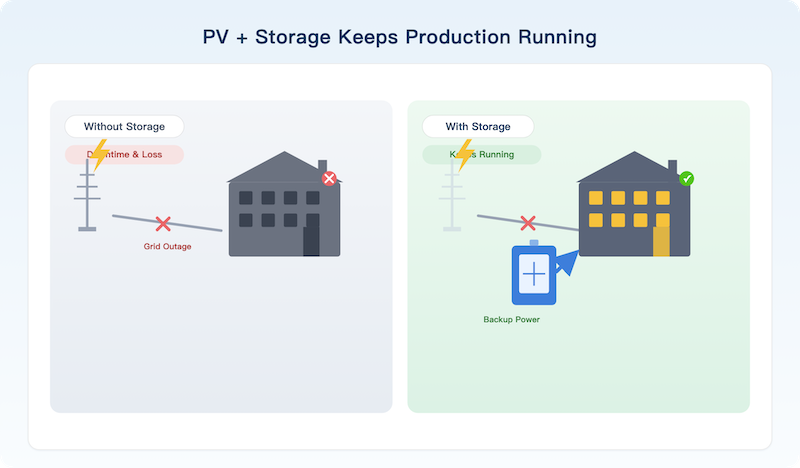
4.Provide emergency backup power supply to avoid production losses caused by power outages.

Industrial and commercial users need electricity to meet their daily production requirements. Emergency power outages not only lead to production halts but also cause economic losses. However, the photovoltaic storage system does not have such concerns. When the mains power is off, the energy storage system will discharge to supply power to the factory loads, thus avoiding the production losses caused by the power outage.

What is included in the energy storage cabinet?

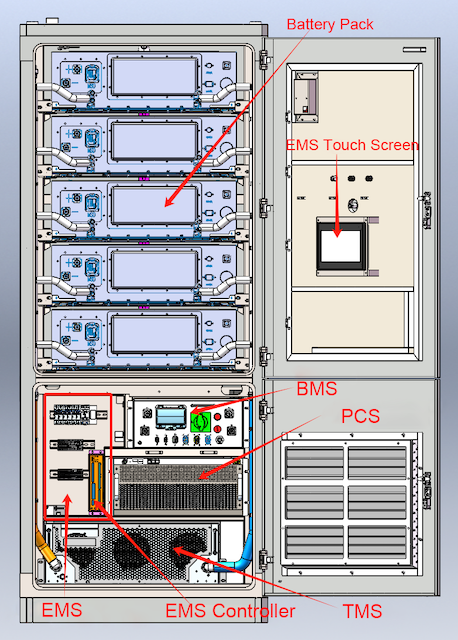
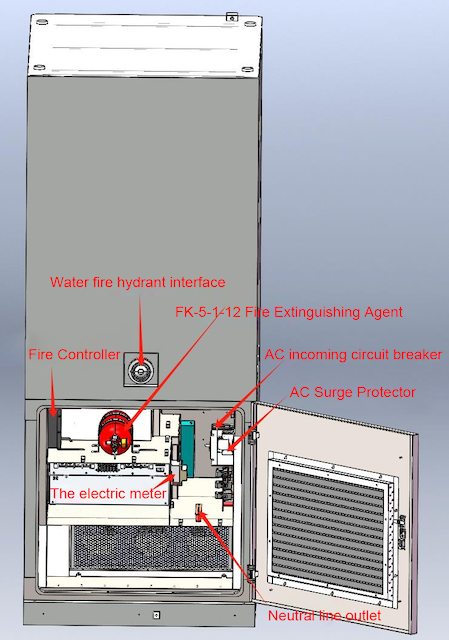
Energy Storage Cabinet is composed of seven core modules: battery cells, BMS, PCS, EMS, thermal management system, fire protection system, and power distribution system. These modules are interrelated and operate in coordination to form a complete safety system. They can be applied in large industrial parks, transportation stations, commercial supermarket, and logistics parks.

As the professional energy manufacturer,JMSUN is not only provide full range of energy storage product 50kw/107kwh,1ookw/225kwh,125kw/241kwh,125kw/261kwh,210kw/410kwh,the customized storage cabinet is highly appreciate, we also provide the EPC construction for the clients who trouble with product installation, welcome your any inquiry for the solar energy storage project anytime!

Front Appearance

The front  is shown by the Battery pack, BMS,EMS,PCS,Thermal management system.

Back Appearance

The back is shown by the fire protection system, and power distribution system.

2 types of cooling energy storage cabinet

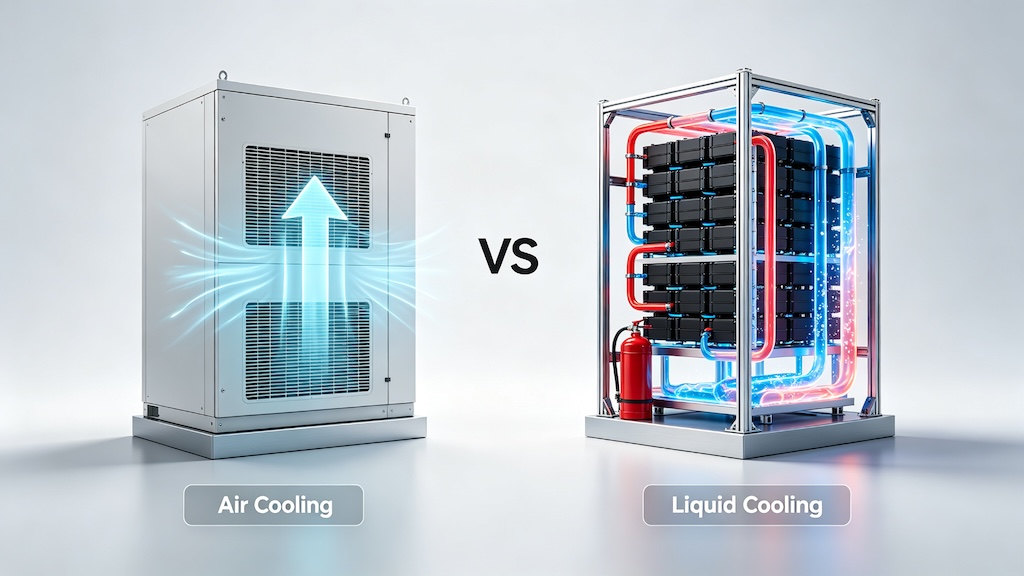
There are 2 types of cooling energy storage cabinet, one is for the Air condition cooling, the whole investment is relative lower,however the work efficiency is lower than the liquid cooling cabinet, which is good for the common commercial project .The another one is liquid cooling cabinet, the whole investment is relative higher than Air cooling cabinet, however the work efficiency is higher than cooling cabinet.It can be used in the project to sensitive to the environmental temperature.

2 Types of Energy Storage System Bus Connection

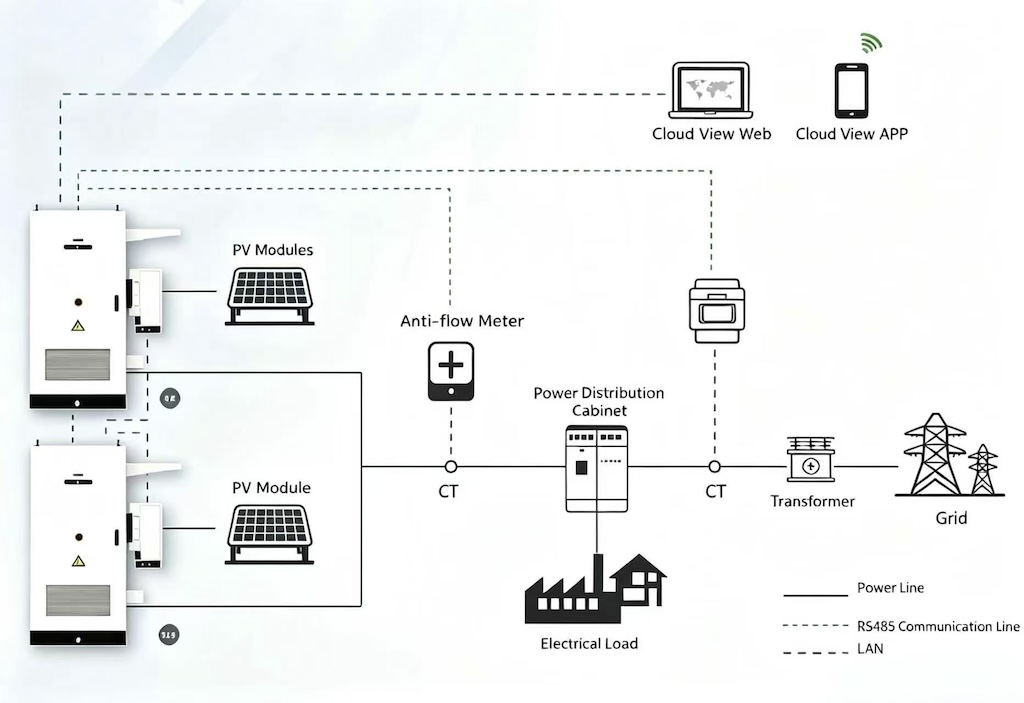
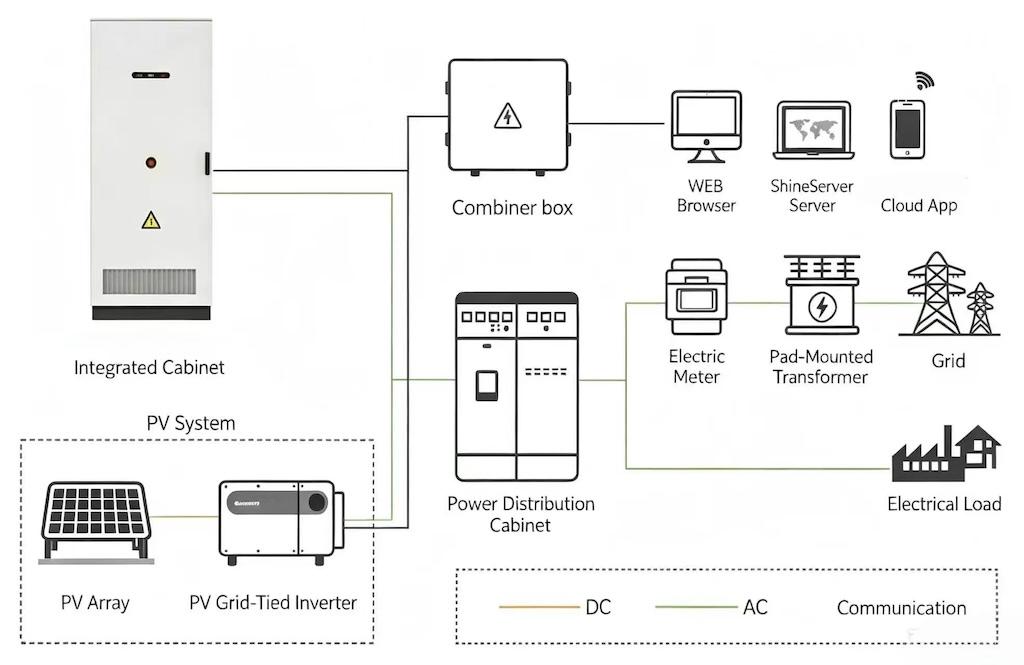
The complete photovoltaic storage system is composed of four major modules: the photovoltaic power generation unit, the energy storage unit, the inverter and grid connection unit, and the energy management.According to the connection method of the bus, there are two main ways connection: AC coupling and DC coupling, which are suitable for different application scenarios.

DC Coupling

The PV modules and energy storage batteries are directly connected to the high-voltage DC bus, eliminating the need for a primary AC-DC conversion process. This results in relatively high energy conversion efficiency and is suitable for new photovoltaic-storage projects. However, the disadvantage is that the equipment cost is high, the system flexibility is low, and the connections between each module are tight.

AC Coupling

Photovoltaic inverters, energy storage PCS, and local power consumption loads are uniformly connected to the AC bus. The structure is simple, operation and maintenance are convenient, and the equipment has strong compatibility. It is suitable for most commercial rooftop photovoltaic and park distributed power stations. The disadvantage is that the multi-level AC/DC conversion results in a small power consumption loss.

How does the energy storage cabinet operate?

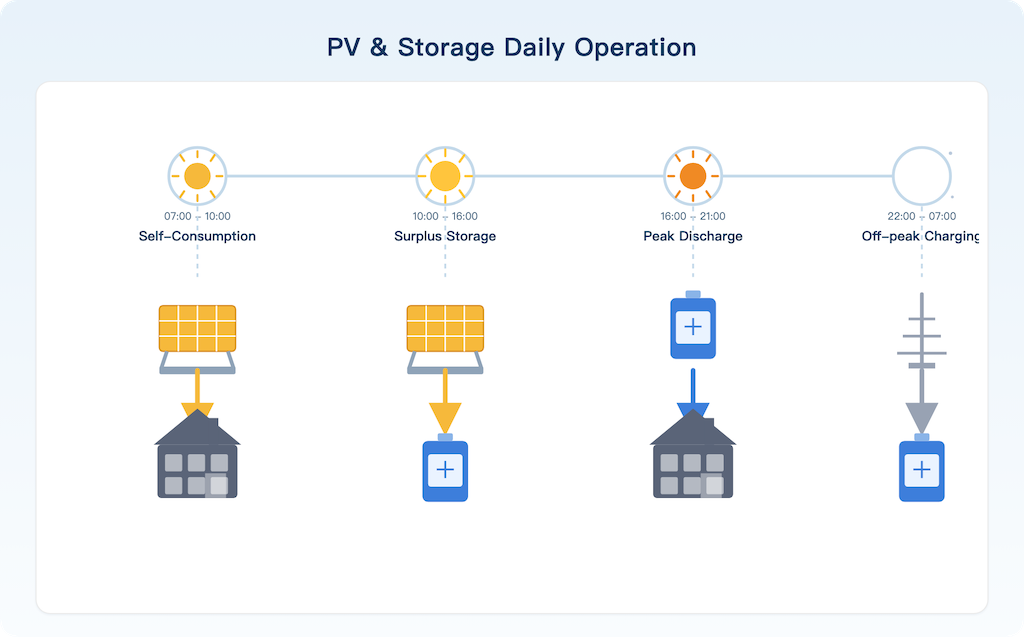
Considering the photovoltaic power, the level of load, and the differences in peak and off-peak electricity prices ,which it can be divided the time into four periods for fully automatic and unmanned dispatching. The core operation logic is as follows:

1. 07:00 - 10:00
Photovoltaic power ramp-up period

Self-generation for self-use, with the storage system supplementing the lower photovoltaic power and gradually increasing it. It prioritizes meeting local load electricity demands such as office and production in the factory area, achieving local consumption of photovoltaic power; when the storage system has surplus power, it can fill the electricity shortage.

2. 10:00-16:00
Peak daytime pv power generation

Self-consumption with surplus power stored. When there is sufficient sunlight, the photovoltaic output reaches its peak, and local load power consumption is prioritized. When the photovoltaic power generation exceeds the real-time electricity demand, the excess power is charged to the energy storage system to avoid generating low-price electricity revenue from the surplus power being fed back to the grid.

3. 16:00 - 21:00
Peak electricity usage period

The energy storage discharges to the local load to reduce the burden during the peak hours. The sunlight weakens at this period, and the output of photovoltaic power generation rapidly decreases. At the same time, the peak electricity usage period arrives. The energy storage system releases the solar green electricity stored during the day to supply the local load.

4. 22:00- 7:00(next day)
Nighttime low-demand period

With no photovoltaic power generation,the local load is at its lowest all the day,and the grid electricity price reaches its lowest point. To meet the demand for peak-valley price difference arbitrage,at the same time, the energy storage maintains a certain amount of redundant power as an emergency backup power source to deal with sudden power outages in the grid and ensure uninterrupted power supply for critical equipment.

How to maintain the energy storage cabinet?

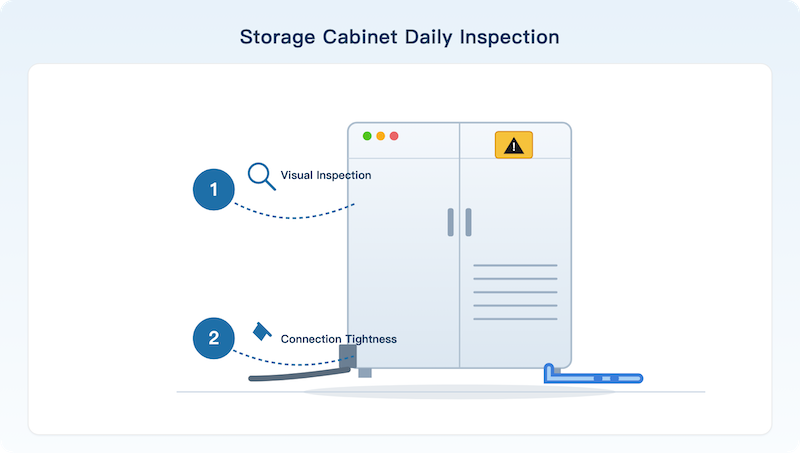
Visual inspection

Check if the cabinet has any deformation, rust, or poor sealing. Prevent the influence of external conditions (such as rain and dust) on the equipment; Connection components tightnessEnsure that the cables, pipes, and screws are not loose to avoid poor contact or coolant leakage.

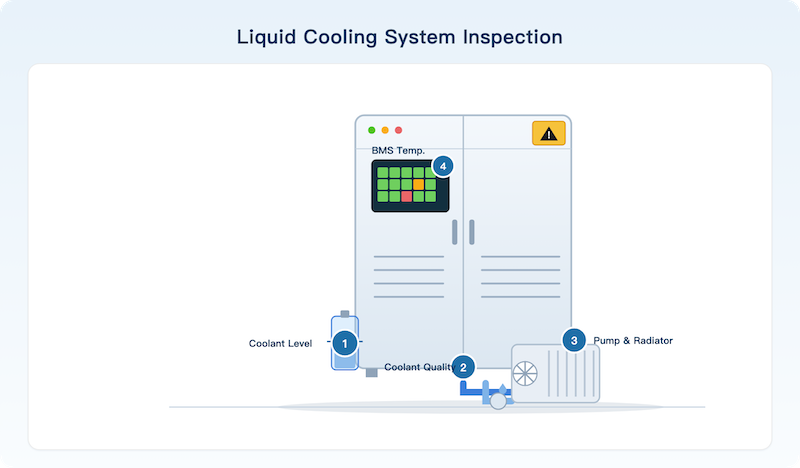
Liquid cooling system inspection

Observe whether the coolant level is normal. If it is below the standard line, replenish it promptly; Check if the coolant is cloudy or contains impurities. If necessary, replace it; Check if there is any leakage at the pipe joints to ensure that the circulation pump and radiator are operating normally。

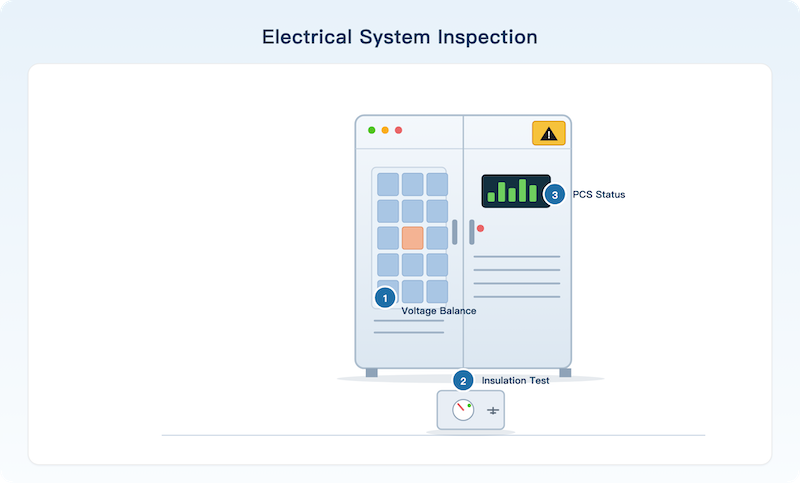
Electrical system inspection

Check if the voltages of the battery pack are balanced. Excessive voltage deviation of individual cells may affect the overall performance; Regularly test the insulation resistance of the system to prevent the risk of leakage; Observe if the inverter has abnormal noises, overheating or alarm messages.